

Black Friday SEO: 10 tips to start preparing!

The end of the year is still a while away. Should you start preparing for Black Friday and the holiday season already? Yes! They’re the biggest sales of the year, and ranking in Google is something you take time to do. It’s never too early to start preparing your deals. So, if you are a merchant with an online store or an ecommerce business, let’s start working on your holiday season and Black Friday SEO immediately!
Don’t forget that Black Friday (November 27, 2026) and Cyber Monday (November 30, 2026) are kicking off this year’s holiday shopping season. You can set up a lot of content for all occasions. In this post, we’ll review some things you can do to prepare for Black Friday!
Key takeaways
- Start preparing for Black Friday and the holiday season SEO early, as it takes time for content to rank.
- Focus on strategies like discount deals and strong online presence, tailored marketing campaigns, and comprehensive product pages.
- Conduct holiday season keyword research to align with changing consumer behavior and emerging trends.
- Use social media and newsletters to promote Black Friday gift pages and introduce new products effectively.
- Optimize your website’s speed, mobile experience, and local SEO to maximize visibility and sales during the holiday season.
Black Friday shopping this year
Today, people are used to shopping online. It’s easy and convenient. You don’t have to travel only to find something out of stock. Plus, online stores often offer payment plans. Shopping online is so popular that holiday season sales keep setting records, and the numbers will only continue to rise. That’s why it’s safe to assume that people will buy many (if not most) holiday gifts online this year.
Staying on top of trends to prepare for the holiday season is a good idea. E-commerce is still growing, and consumers expect more every year. Here are some actionable tips for the upcoming Black Friday and holiday season to improve your SEO:
- Discount deals and alternative payment options (Buy now, pay later) should be part of your ecommerce strategy.
- Brands should provide a consistent purchasing experience across digital/online and physical stores.
- To minimize returns, brands should make their product pages as comprehensive as possible.
- Holiday season marketing campaigns should be tailored to each platform to ensure maximum effectiveness.
Online is where it’s at
Of course, in-store or curbside pick-up will still prove popular. However, most people research their ecommerce purchases online, sometimes weeks in advance! So don’t be surprised when the holiday shopping season starts well before Black Friday and continues for weeks.
Extending Black Friday, Cyber Monday, and other holiday season online deals for a few days or weeks can be a good idea. This is especially true if you want to prevent huge crowds from gathering at your store on a specific day. That won’t be a good shopping experience for anyone involved, so spreading these deals over a longer period is probably better.
Start preparing in time
Dive into the data you amassed during previous Black Friday and Cyber Monday events, and see if you can come up with improvements for your e-commerce holiday season SEO. Bear in mind that it takes a while for content to rank. So, to keep up with the competition, try to get your content in gear at least 45 days ahead. That’s often recommended. Of course, you can always start preparing earlier if that works better for you. Your schedule could look something like this:
- 45 days in advance: Post your promotion to your website calendar and post a save-the-date post on social media and in your email newsletter.
- 7 days in advance: Post upcoming events/promotions on social media and via email. Try to encourage other (small) businesses to share it with their followers.
- 1 day in advance: Post an event reminder on social media.
It’s a good rule to remember these steps and time frames. However, you can do much more than set up new pages and renew old ones. Let’s look at a few practical tips.
Do holiday season keyword research
Keyword research is important year-round, but especially during the season when your online store sees big sales. Seasonal search behavior changes significantly as the autumn holidays approach. Early in the shopping season, buyers usually look for general inspiration rather than specific products. For example, in October, people frequently search for broad queries like “gift ideas for teenagers.” As Black Friday approaches, their intent becomes highly transactional. Shoppers switch to focused terms like “Nintendo Switch Black Friday deal” when they are ready to purchase. Consequently, you must adapt your keyword strategy to match these shifting habits.
Mapping this search funnel helps you plan content that captures attention at every stage of the holiday cycle. Competing with massive retail websites for generic terms like “holiday sales” is often difficult for smaller stores. Therefore, you should focus your research on specific long-tail keywords. Variations like “handmade leather bags discount” allow you to reach highly motivated buyers directly. In addition, reviewing your search metrics from previous years can reveal exactly which phrases successfully brought visitors to your online store in the past.
Do look into using Yoast SEO to optimize your content for LLMs like ChatGPT and Gemini.
Set up Black Friday gift pages
First, we must consider which category or particular landing pages make sense for the upcoming holidays. You can always set up pages like ‘Best gifts for parents/millennials/teens’, ‘Newest deals for your 6/10/12-year-old’, and ‘Best friend/grandparents/coworker discounts’. You could also think of ‘Top 10 gifts for outdoor/skiing/parasailing enthusiasts’ and ‘Top 3 deals for stay-at-home parents’, etcetera.
Make sure the page titles and meta descriptions of these gift landing or category pages align with the upcoming holiday season. You can reuse these gift pages for Hanukkah or your summer sale. Find (old) content that fits the holidays, rewrite titles and meta descriptions to match the upcoming season, and chances are you won’t have to do that much work to get them up to date.
Be sure to write proper product descriptions and improve the product images. Learn how to write great product descriptions using our product-specific analysis in WooCommerce SEO and Yoast SEO for Shopify.
To increase the chances of your gift pages ranking, boost their internal linking structure. You can also link to previous all-year holiday season pages, such as specific Christmas landing pages (‘Top 7/10/25 gifts for under the Christmas tree’), to boost them when the time comes. That could be around the 45-day mark, but we would be okay with stretching that to 60 days. You’ll need to give Google and other search engines enough time to crawl your links and find your specific holiday-season SEO landing pages with deals.
Promote on social media and in your newsletter
Social media like X and Instagram can play a big role in the success of your (online) Black Friday sale. Take Pinterest, for instance. Many people have a Pinterest Christmas wish list. As a merchant, it would be amazing to get your products on people’s wish lists, which can positively impact your reach and maybe even your sales.
While you’re at it, don’t forget to share your Black Friday gift pages on Facebook and other social media. Maybe even make short videos to post on TikTok. In the previous section, we mentioned the top ten lists. We all know these still work pretty well on social media. Yoast SEO can help you optimize your social media posts before you share them.
Email marketing
Last but not least, remember your email marketing! For many companies, newsletters provide a steady stream of income. Be sure to plan a good campaign for your newsletters.
For example, we recommend setting up holiday gift guides and sharing these. You can create an excellent overview of many gifts that many people will enjoy. ELLE and Target have pages like that, and so do more companies.
Introduce new products early
If you plan to launch new products for the holiday season, do not wait until inventory arrives to publish the pages. Creating your product listings early gives search engines time to discover and crawl the new URLs. Many store owners make the mistake of keeping new arrivals hidden until the exact launch day. However, this practice prevents your pages from appearing in search results during the holiday shopping rush. Therefore, setting up a “Coming Soon” page helps you build an early search presence weeks in advance.
You can design these temporary pages to build anticipation and capture interested buyers before the sale starts. For instance, you should include a clear email signup form specifically for product stock alerts. When shoppers register for these updates, you build a targeted list of people ready to purchase that item. In addition, you must keep the URL structure permanent and simple. Avoid including specific years or seasonal words in the web address so you can easily reuse the page for future campaigns.
Once your holiday inventory arrives, you simply swap the signup form for a standard checkout button. This transition is effective because the page already exists in the search index. As a result, shoppers can find your new items immediately. Yoast SEO helps you manage this process by automatically creating the necessary structured data for your pages. Later on, you can build early interest in your upcoming stock while ensuring search engines can discover your listings.
Add structured data to your product pages
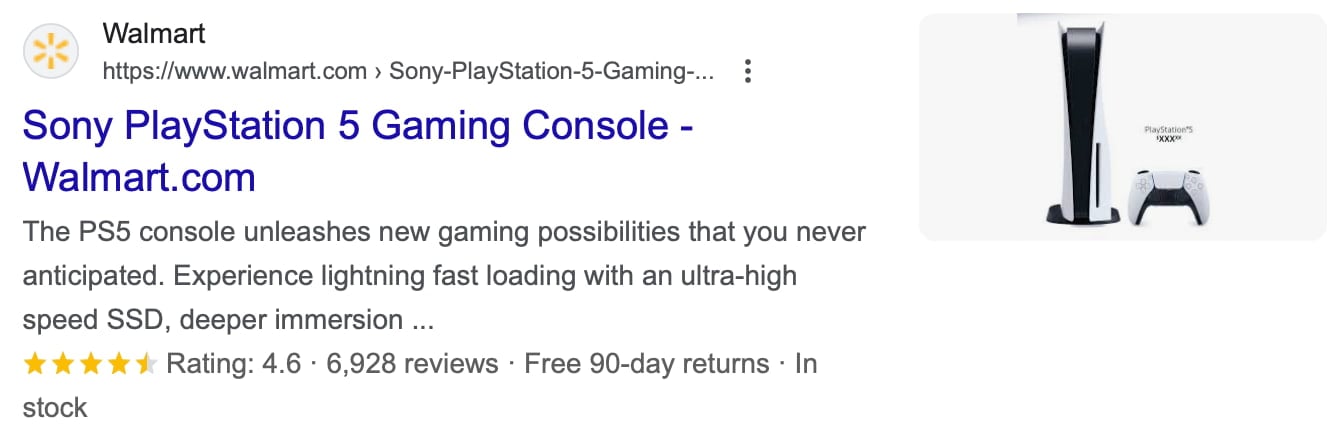
When adding or updating your product pages for the holiday season, don’t forget to optimize them. Check, for instance, whether you’ve added structured data to your product pages. Rich results that show ratings and prices can give you an edge over your competitors. Our WooCommerce SEO plugin, Local SEO plugin (included in Yoast SEO Premium), or Yoast SEO for Shopify app can help you do this to improve your holiday season!
Read more: Structure data with Schema.org: the ultimate guide »
Check your product feeds
Managing your product feed correctly ensures your holiday discounts display accurately across Google’s shopping tab. Many merchants update prices only on their website pages. However, Google can take days to crawl your store for updates. Therefore, waiting for an organic crawl might cause you to miss out on early holiday shoppers. Submitting your promotional data directly through Google Merchant Center solves this delay. As a result, this step gives your inventory the best chance of being found at the correct price when the shopping rush begins.
To prepare for the holiday rush, you should configure specific promotional attributes within your feed dashboard. For example, using the sale price effective date attribute lets you schedule your holiday discounts in advance. This configuration ensures your Black Friday prices go live automatically at midnight without requiring last-minute manual updates. In addition, you must ensure your feed data matches your website precisely. Mismatched prices or titles between your store and Google Merchant Center can cause automatic item disapprovals.
Reuse content
There’s no shame in serving old wine in a new bottle. If you have a Black Friday or a Christmas gift guide for 2025, feel free to reuse it in 2026. Update the year and details like popular brands and products for that year. If the slug of your URL is /black-friday-guide-2025/, change it to /black-friday-guide-2026/ around August next year, and redirect the old URL to the new one. No need to create a new page. It would be a waste of nice inbound links not to reuse that old URL. Of course, this is even easier if you don’t include the year in the URL, so /black-friday-guide/ is also an excellent slug.
In the months before the holiday season, you could even simply repost popular posts from last year (a bit adjusted or updated if needed) on social media. Valentine’s Day might even become Secret Santa. Cyber Monday might match your child’s favorite gifts for Ramadan. These are probably small adjustments; perhaps just adding ‘this Ramadan’ to a meta description or title will do.
Use generative AI with care
Using generative AI tools to write holiday gift guides and product descriptions is tempting when you are short on time. However, relying completely on these tools to generate your text can create unexpected problems for your store. AI models often generate text that feels thin and overly generic. Since many store owners use the same tools, your copy might end up looking identical to your competitors’ pages. Google focuses heavily on original content created for real people. Therefore, generic text reduces your pages’ chances of being found.
You can still use these tools to speed up your holiday preparation if you apply them carefully. For example, AI is excellent for brainstorming gift ideas, generating content outlines, or proofreading your existing text. However, the secret to success lies in adding your own human curation to the final draft. You should inject real customer reviews, unique product benefits, and your personal expertise into every gift guide. Sharing specific details about why an item makes a great gift turns a generic list into a valuable resource for shoppers.
Creating high-quality content takes effort, but the rewards for your online store are worth it. Yoast SEO analyzes your articles for readability and structure as you write. For instance, the tool flags overly long paragraphs and helps you maintain a conversational voice. Combining your unique product knowledge with our analysis helps you create festive content that stands out. Of course, Yoast SEO offers AI tools that can help you improve your productivity. This approach gives your website the best chance of being found by holiday shoppers.
Keep reading: Should I update or delete old content? »
Optimize for page and user experience
It’s a good idea to check and optimize your website for speed and mobile use. Trust us; you’ll get these recommendations from an SEO blog or consultant daily. And with good reason! Mobile, site speed, and user experience are essential to get people to spend money on your ecommerce business this Black Friday. When preparing your online store for the holiday sale season, this is as good a time as any to check your mobile website and site speed, and update or improve them if possible.
To start, review Google’s Core Web Vitals and use these to improve your site. Here are five ways to boost your Core Web Vitals scores.
Read on: How to check site speed »
Local business? Focus on local SEO
Investing in local SEO for Black Friday and Christmas shopping is essential for local businesses aiming to attract more customers. Begin by optimizing your Google Business Profile with accurate business information, including address, phone number, business hours, and any special Black Friday/Cyber Monday hours or promotions. Encourage satisfied customers to leave positive reviews. Use local keywords in your content, focusing on terms your community will likely search for, such as “Black Friday deals in [Your City].” Additionally, engage with your local community on social media by promoting special deals to drive more foot traffic to your store.
Create a measurement plan
All set? Remember to make a measurement plan to analyze your success. Write down all your plans, then think about how to track all your actions. This is key to knowing what to focus on next year. For detailed instructions on analyzing your Black Friday, Cyber Monday, or Cinco de Mayo shopping, read our post with five tips to measure your holiday sales success. Using Yoast AI Brand Insights, you track how your brand appears in AI search engines and LLMs such as ChatGPT, Gemini, or Claude.
What should you do when the holiday season is over?
How do you handle the product pages of holiday gift sets after the holidays? Even if the gift set or product was a great success, and you want to offer it again next year, it’ll take a while for the page to be relevant again. What is the best way to deal with these pages in the meantime?
Our advice: Keep the pages up. However, you don’t necessarily want them visible to people browsing your site. So, have the page up without linking, then link to it again during the holiday season. This is better than deleting it and starting again.
Conclusion on Black Friday SEO
In short, now’s the time to buckle down and start writing holiday gift pages and content for new products. Remember to plan your social media promotion and analytics. After all, you can never start too early when your online business depends on the holiday season. Be prepared; start your SEO now. Good luck with your holiday season sale!
Keep on reading: eCommerce usability: the ultimate guide »
