

Optimize content while writing
Yoast SEO Analysis
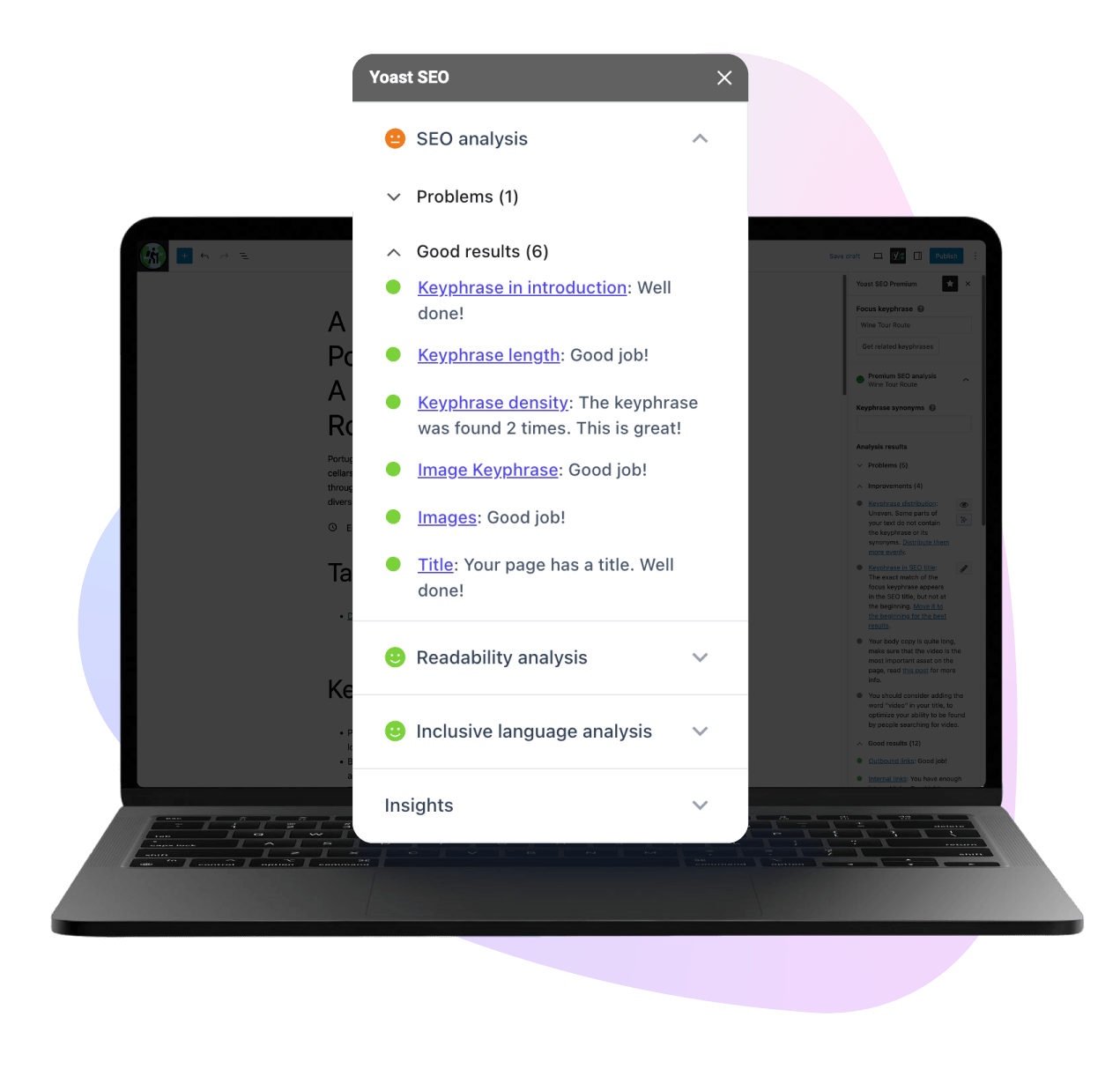
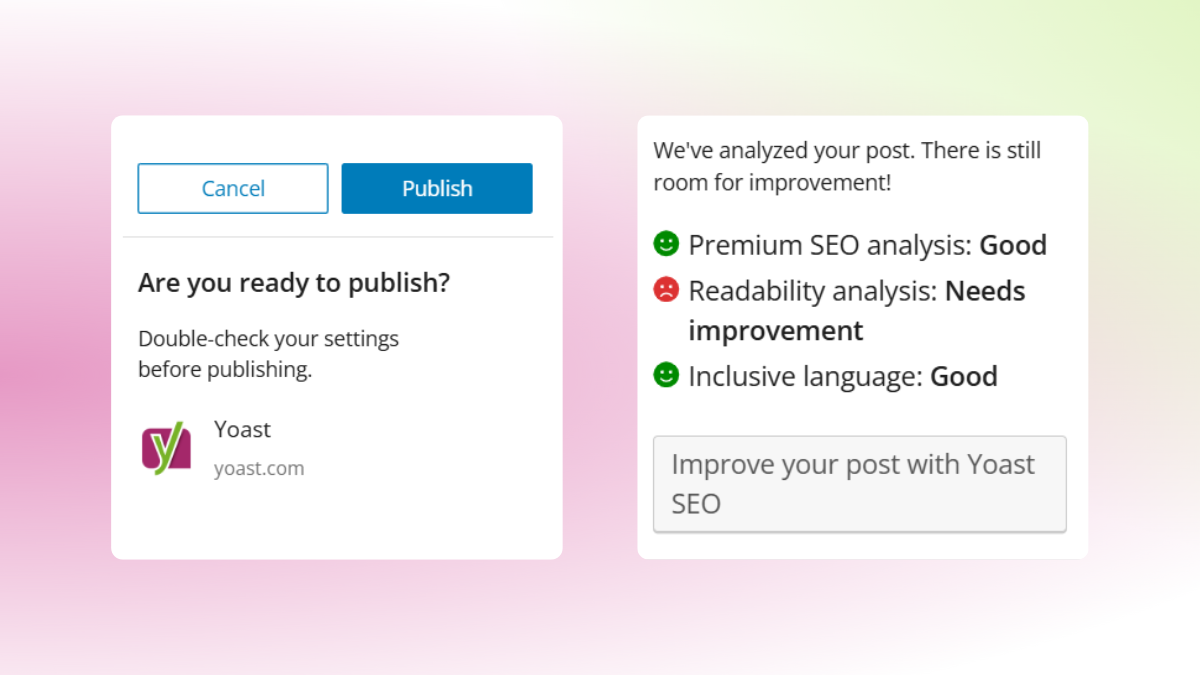
Ensure your content meets best practices by getting real-time feedback as you write. The SEO Analysis helps you elevate your content for both readers and search engines.
Included in Yoast SEO, Yoast SEO Premium, Yoast SEO for Shopify, Yoast WooCommerce SEO, Yoast SEO AI+, and the Yoast SEO Google Docs Add-On.
Why should I use the SEO Analysis?
For most people, SEO is like a black box that you throw some stuff in with the hopes of coming out on top. With Yoast SEO, we open that box and show you what needs to be done. Our plugin, and its analysis are built by SEO experts with years of experience in the industry. Our team regularly conducts research to assess if everything we do in Yoast SEO is still relevant and useful. We continuously work on adding features that allow you to stay on top of the latest developments in SEO.
What does the SEO Analysis do?
The SEO analysis uses the focus keyphrase you set to check if it appears where it should. For instance, the title of your post, URL, and meta description. But it also checks other elements that impact the visibility of your pages. Simply start writing, add images and links and the analyses gives you feedback in real-time. You’ll get a red or orange light that automatically turns green once you meet a certain threshold. There are over 15 checks to help you optimize your content for online readers and search engines.
The SEO Analysis: Premium vs. free
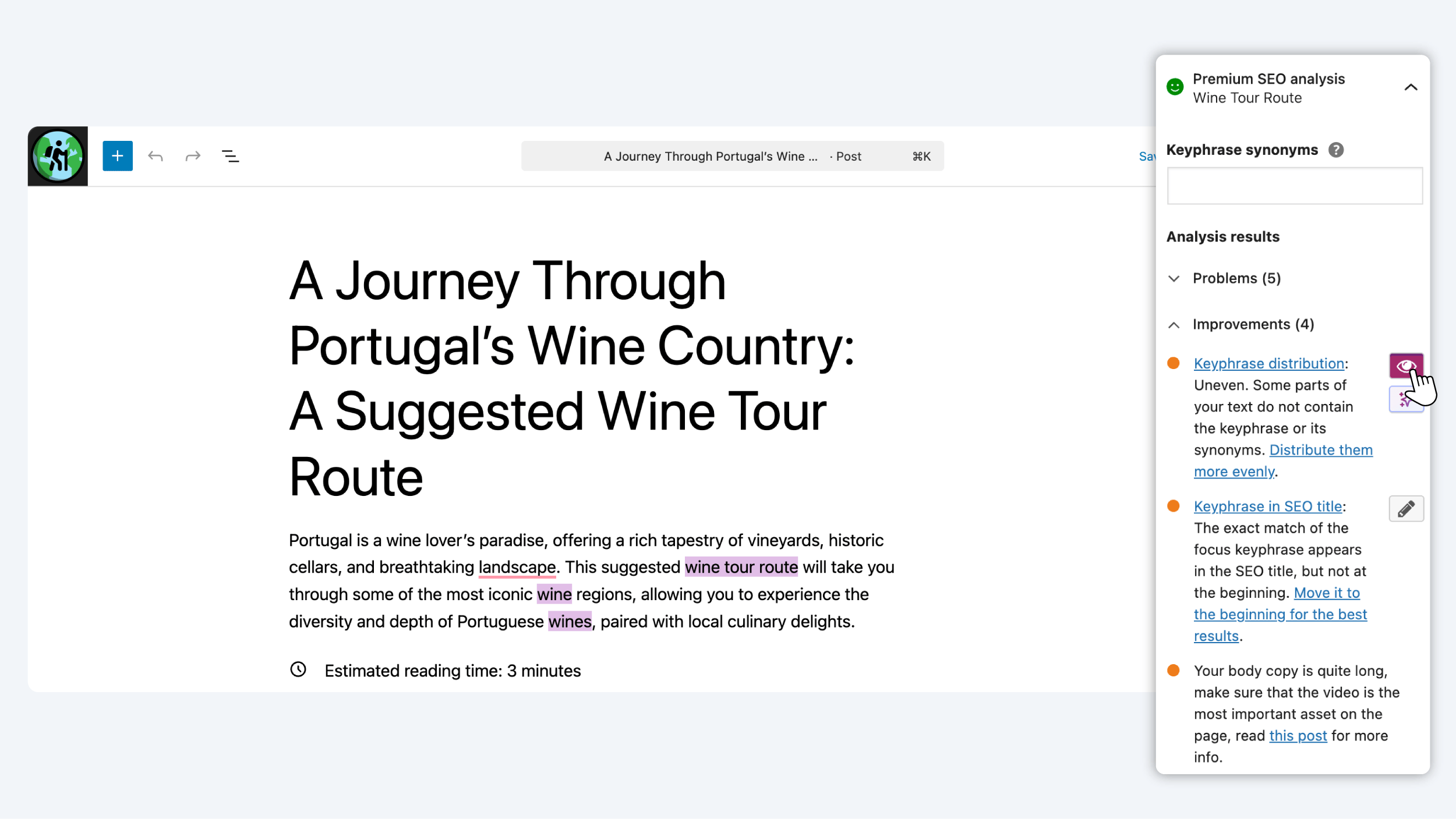
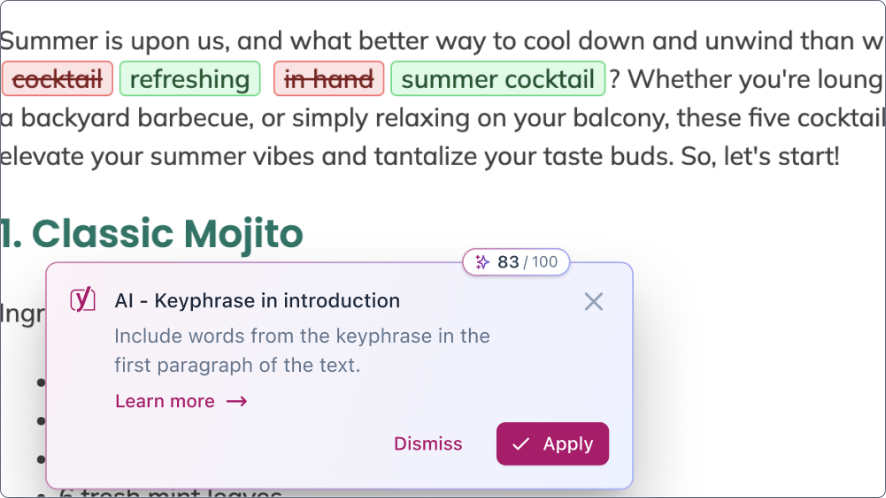
The free version of Yoast SEO helps you with the basics; Yoast SEO Premium helps you elevate your content by writing more naturally. It allows you to optimize your content for related keyphrases and synonyms and recognizes different word forms of your keyphrase. Yoast SEO Premium also includes Yoast AI Optimize, an AI-powered feature that suggests customized edits to further optimize your content.
The assessments in the Yoast SEO Analysis
Our SEO Analysis uses the traffic light system to indicate how well your content scores overall and per specific assessment. So what exactly does it assess? Here are the checks that our analysis looks at:
| Assessment | Description |
|---|---|
| Keyphrase in introduction | Checks whether words from the keyphrase can be found in the first paragraph. |
| Keyphrase length | Checks whether the number of (content) words in the keyphrase is within the recommended limit. For languages with function word support only content words are considered. For languages without function word support all words are considered. |
| Keyphrase density | Checks whether the (content) words from the keyphrase are used in the text and whether they are used often enough (but not too often). For a match to be found, all content words should occur in one sentence. Multiple occurrences of all content words within one sentence are considered multiple matches. |
| Keyphrase in meta description | Checks whether all (content) words from the keyphrase are used in the meta description. A match is counted if all words from the keyphrase appear in a sentence. Multiple matches per sentence are counted multiple times. |
| Keyphrase in subheadings | Checks whether the subheadings reflect the topic of the copy (based on keyphrase or synonyms). A subheading is considered to reflect the topic if at least one (content) word from the keyphrase is used in it. |
| Link focus keyphrase | Checks if there are links in the text, whose link text contains keyphrase. |
| Keyphrase in image alt attributes | Checks if there are keyphrase or synonyms in the alt attributes of images. |
| Keyphrase in title | Checks if the keyphrase is used in the page title. |
| Keyphrase in slug | Checks if the keyphrase is used in the URL. |
| Previously used keyphrase | Checks if the words from the keyphrase were previously used in a keyphrase for a different post. |
| Keyphrase distribution (Premium) | Checks how well the words from the keyphrase are distributed throughout the text. |
| Text length | Checks if the text is long enough. |
| Outbound links | Checks if outbound links are present and followed. |
| Internal links | Checks if internal links are present and followed. |
| SEO title width | Checks if the title has a good length. |
| Meta description length | Checks if the meta description has a good length. |
| Text length for taxonomy pages | Checks if the taxonomy page has a good length. |
| Stale cornerstone content (Premium) | Checks if you’ve updated your cornerstone articles recently. |
Meet the 3 content analyses
In addition to our SEO analysis, there are two other analyses in Yoast products. These allow you to further optimize your text and reach as many people as possible.

SEO Analysis
An analysis focused on helping you write content that meets SEO best practices without losing sight of the most important thing: your site visitors. Included in Yoast SEO, Yoast SEO Premium, Yoast SEO for Shopify, Yoast WooCommerce SEO, Yoast SEO AI+ and the Yoast SEO Google Docs add-on.

Readability Analysis
The Readability Analysis gives you feedback on the readability of your content. Allowing you to write content that is easy to understand for humans and machines. Included in Yoast SEO, Yoast SEO Premium, Yoast SEO for Shopify, Yoast WooCommerce SEO, Yoast SEO AI+ and the Yoast SEO Google Docs add-on.

Inclusive Language Analysis
The Inclusive Language Analysis helps you write in a way that welcomes all readers, regardless of background, identity or ability. Included in Yoast SEO, Yoast SEO Premium, Yoast SEO for Shopify, Yoast WooCommerce SEO, Yoast SEO AI+ and the Yoast SEO Google Docs add-on.
Must have
SEO starts with Yoast
Don’t miss out on what these premium products can do for you!

With a premium Yoast SEO subscription, you can contact our support team with your questions 24/7.

In our help center, you can find all the answers to questions about both free and premium plugins.

In our help center, you can find all the answers to questions about both free and premium plugins.

Learn everything about SEO, WordPress, and our plugins with our free and premium online courses.