

What are YMYL websites? How does Google evaluate these?

SEO is all about trying to rank high on search engine results pages. However, not every website is treated equally by Google. Sites focusing on topics that impact people’s lives and finances have a higher standard to meet. Welcome to the world of YMYL, where improving content goes beyond regular SEO techniques. In this article, we’ll explore what YMYL sites are and how Google holds them to a higher standard.
Key takeaways
- YMYL stands for ‘Your Money or Your Life’ and refers to websites that impact users’ finance, health, and safety.
- Search engines like Google hold YMYL content to higher standards due to its potential impact on users’ lives.
- Building user trust through accurate and reliable YMYL content enhances website credibility and authority.
- Google’s Quality Raters’ Guidelines evaluate the experience, expertise, authoritativeness, and trustworthiness of YMYL content.
- Using Yoast SEO Premium helps optimize YMYL pages by following publishing principles and site policies for better performance.
What is YMYL?
YMYL, an acronym for “Your Money or Your Life,” refers to sites that write about topics significantly impacting users’ financial stability, well-being, and overall quality of life. These pages cover various subjects, including finance, health, safety, legal advice, and more. YMYL content often revolves around areas where accurate information and expert advice are crucial for making informed decisions.
Google holds YMYL content to a higher standard than other web pages. This is because the information on YMYL pages can directly impact users’ lives, making the integrity and accuracy of these pages extremely important. Search engines strive to ensure that YMYL content is reliable, trustworthy, and expert-backed.
Examples of YMYL topics
Examples of YMYL topics include:
- Financial advice: Sites publishing information and advice related to investments, taxes, retirement planning, mortgages, insurance, and other financial matters fall under YMYL.
- Health and medical information: Websites offering guidance on medical conditions, treatments, medications, nutrition, mental health, and fitness fall into this category, as they significantly affect individuals’ well-being.
- Safety and emergency information: Pages containing crucial safety instructions, disaster guidelines, and emergency services information fall into this category. These pages play an important role in protecting lives and ensuring public safety.
- Legal advice: Websites providing legal information, explanations of regulations, and guidance on legal matters fall under YMYL. Proper legal advice can be critical in crucial situations, determining the outcomes of legal disputes or guiding users through complex legal processes.
- News and current affairs: News websites reporting on current events, politics, business, science, technology, and other topics can also be classified as YMYL. These sites provide accurate and unbiased information that influences public opinion and decision-making.
- Government and civics: Content about elections, policies, or societal issues also falls under YMYL.
- AI-generated content: Google emphasizes human review for AI-assisted YMYL content to ensure accuracy and trustworthiness.
Understanding the scope and significance of YMYL content is essential for optimizing these pages effectively. You must ensure that users receive reliable, trustworthy, and accurate information when they need it most.
The importance of YMYL
YMYL content holds significant importance for search engines and website visitors. Because of its potential impact on users’ lives, Google prioritizes YMYL pages and sets higher standards for their quality and credibility. Understanding the importance of YMYL and its role in SEO is essential if you create content in this space.
Why do search engines focus on YMYL content?
Google focuses on YMYL content because it recognizes how these topics can influence users’ lives and financial well-being. Search engines aim to provide users with the most trustworthy information possible. When it comes to YMYL topics, the stakes are higher. Search engines want to make sure users receive information they can rely on when making important decisions.
By evaluating YMYL content more critically, Google aims to distinguish good sources from bad ones. This ensures users see pages with reliable guidance, expert insights, and accurate information. Prioritizing YMYL content ultimately improves the overall quality of search results and helps build user trust in search engines as reliable sources of information.
AI’s impact on YMYL
Google increasingly relies on AI to assess YMYL content, especially for high-stakes topics like finance, health, and safety. AI systems now evaluate content quality, fact-check claims, and prioritize trustworthy sources in search results. However, human oversight remains essential. AI-generated YMYL content must still undergo expert review to ensure accuracy, transparency, and compliance with Google’s E-E-A-T standards. This balance between AI efficiency and human expertise helps maintain the reliability of YMYL information in search rankings.
Building user trust
YMYL content needs user trust. Users seek guidance they can trust when searching for financial, health, or legal information. By publishing high-quality and trustworthy content, site owners can establish themselves as authoritative sources within their respective industries.
Building user trust begins with providing accurate and reliable information backed by experts and credible sources. Demonstrating experience, expertise, authority, and trustworthiness (E-E-A-T) is crucial for YMYL content creators. This includes making sure the information is up-to-date, fact-checked, and sourced. Including credentials, expert reviewers, author biographies, and external references can further enhance the YMYL content.
When users see a YMYL website as trustworthy and credible, they are likely to visit it often, share the content with others, and become loyal customers or clients. Search engines also consider user trust signals, such as engagement metrics and positive reviews, when checking the quality of YMYL content.

YMYL and the Google Quality Raters’ Guidelines
Google’s Quality Raters’ Guidelines help assess the quality and relevance of web pages, especially YMYL content. These guidelines provide insights into how Google evaluates the E-E-A-T of sites, which helps optimizing YMYL pages well.
Insights into Google’s guidelines for YMYL pages
The Google Quality Raters’ Guidelines outline specific criteria for evaluating YMYL content. These guidelines help Google validate that its algorithm understands and ranks web pages appropriately. E-E-A-T is not a direct ranking factor but a framework Google uses to evaluate content quality. Some critical factors considered within the guidelines include:
- Experience: For YMYL topics such as finance or health, having experience could mean that the content creator has worked as a financial advisor, a healthcare professional, or has a background in a specific field. This experience provides credibility and expertise that can be valuable when creating YMYL content.
- Expertise: Google expects YMYL content to be created by individuals or organizations with a demonstrable level of expertise in the field. You can show this expertise through qualifications, experience, industry recognition, and contributions to reputable publications.
- Authoritativeness: Google gives weight to YMYL content from authoritative sources. This can include sites that have established credibility in the respective industry, are recognized by experts or organizations, or have a strong reputation for publishing accurate and reliable information.
- Trustworthiness: Trustworthiness is crucial for YMYL content. Google evaluates factors such as transparency, accuracy of information, and transparent disclosure of potential biases. Websites with a history of complaints, misinformation, or malicious intent are likely to be seen as less trustworthy.
- Content quality: Google expects high-quality YMYL content to provide comprehensive and insightful information. The guidelines emphasize the importance of avoiding shallow content. YMYL pages should satisfy user intent by addressing the main concerns and questions related to the topic.
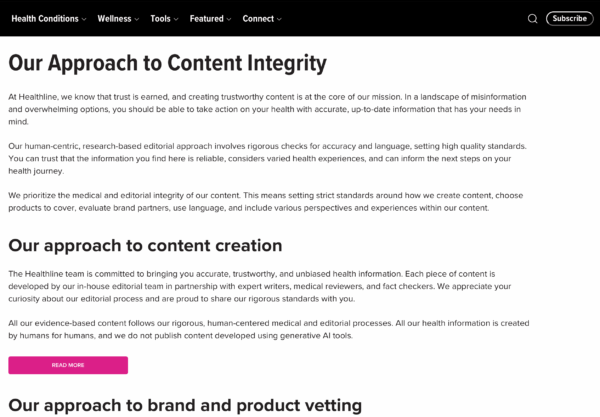
How Quality Raters assess E-E-A-T
Google’s quality raters check various factors to determine content creators’ or website owners’ experience, expertise, authoritativeness, and trustworthiness. While the exact details of the process are unknown, quality raters evaluate various elements when checking the experience of individuals or organizations. These aspects help determine the level of expertise and authority.
Here are some factors they look at:
- Qualifications and credentials: Quality raters examine the qualifications and credentials of content creators, such as formal education, certifications, and professional qualifications directly related to the topic. These indicators demonstrate a commitment to learning, acquiring knowledge, and advancing within the field, adding credibility to their expertise.
- Professional experience: The practical experience of content creators or website owners within the industry is an important aspect evaluated by quality raters. This may include previous work experience, industry involvement, or practical expertise gained through specific projects or research. Raters assess the depth of experience to determine the level of knowledge.
- Demonstrated knowledge and authority: Raters assess content to determine the creators’ depth of knowledge and authority. This can be evaluated through comprehensive and detailed explanations, references to reputable sources, and the provision of unique insights or perspectives. The ability to offer valuable information and display up-to-date expertise in the field is crucial in establishing perceived authority.
- Industry recognition: Quality raters consider any industry recognition or acknowledgment received by content creators or website owners. This may include awards, honors, invitations to speak at conferences, or inclusion in expert lists or directories. Such recognition highlights expertise and authority within the industry, further solidifying credibility.
- User feedback and engagement: User feedback, reviews, and testimonials may also be considered by raters when evaluating experience. Positive feedback, active engagement with the audience, and a history of providing valuable and helpful information indicate experience that resonates with users and builds trust. These are important trust signals for YMYL content.
- Transparency: Publishers should disclose biases, funding sources and other important policies to align with Google’s emphasis on authenticity.
Refining algorithms
Quality raters provide feedback to Google, which uses this information to refine algorithms and improve search results. While quality raters do not directly influence rankings, their assessments are help Google understand if everything works as intended.
Yoast SEO, E-E-A-T, YMYL and site policies
Yoast SEO Premium helps you build your website’s E-E-A-T. As we’ve seen in this article, Google checks many factors to evaluate the quality of YMYL sites. To help Google understand your site, Yoast SEO Premium has multiple options to direct it to the proper sources. Publishing principles and site policies are central to this process, providing insights for Google. In Yoast SEO Premium, we can add these pages to your structured data.
Publishing principles and site policies guide content creation and distribution. They ensure your content is accurate, trustworthy, relevant, transparent, engaging, private, accessible, continuously improved, and legally compliant. Following these principles delivers high-quality content users can rely on.
Structured data and AI Overviews for YMYL content
Structured data helps Google better understand YMYL content, ensuring it is optimized for AI-generated summaries and passage-level clarity. With the rise of AI Overviews, YMYL sites must prioritize structured data to improve visibility in search results. This includes using schemas like publishingPrinciples to highlight policies and expertise, which helps Google assess credibility and relevance more effectively.
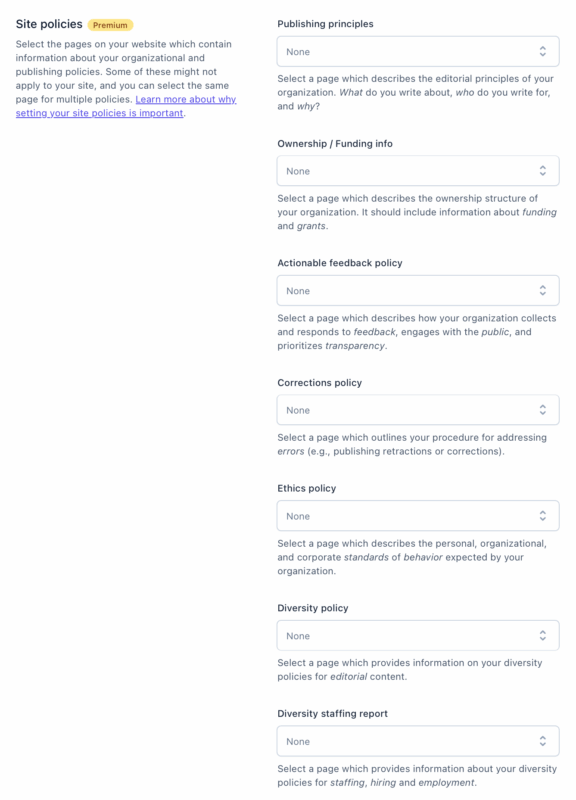
Yoast SEO Premium includes the publishingPrinciples schema to help you with this, making it your principles easily to find for search engines. Head to the Site basics settings in Yoast SEO and navigate to the Site policies section.
Here, you’ll find different options for publishing principles, such as general publishing principles, funding information, corrections policy, ethics policy, diversity policy, and more. Select the pages from the fields, and you’re all set. If you still need to set up these policies, now is a great time to start building them to improve your website’s credibility and SEO performance.
Conclusion
If you are looking to be succesful with a YMYL site, you need to work through several connected steps. When you align with Google’s guidelines, build E-E-A-T, and apply strong optimization methods, you can improve the performance of your YMYL site, gain audience trust, and stand out as a leader in your field.
